// PROJET SÉLECTIONNÉ
Infrastructure Universelle
de Télémédecine.
Une plateforme hospitalière numérique multi-entités conçue pour unifier le triage des patients, les consultations vidéo et les dossiers médicaux en un "Système d'Exploitation" unique et évolutif.
< 1.2s
Latence Vidéo
Réseau Global Edge
100%
Conformité
Conforme CNDP/RGPD
3 Clics
Réservation
Optimisé pour la Conversion
98/100
Performance
Score Lighthouse
Le Problème de Fragmentation
Les cabinets privés et les cliniques multi-spécialités s'appuient souvent sur une architecture hétéroclite composée d'outils déconnectés : Calendly pour les rendez-vous, Zoom pour la vidéo et le papier pour les dossiers.
Cette fragmentation génère des silos de données, alourdit les tâches administratives et oblige les patients à multiplier les applications pour une simple consultation.
La Solution Unifiée
Nous avons conçu un Système d'Exploitation Clinique Zero-Trust qui centralise l'intégralité du parcours patient.
- Routage Multi-Spécialités (Dentaire, Derma, Généraliste)
- Contrôle d'Accès par Rôles (Vue Patient vs Médecin)
- Gestion de la File d'Attente en Temps Réel
Conçu pour Évoluer
Implémentations techniques clés au cœur de la plateforme.
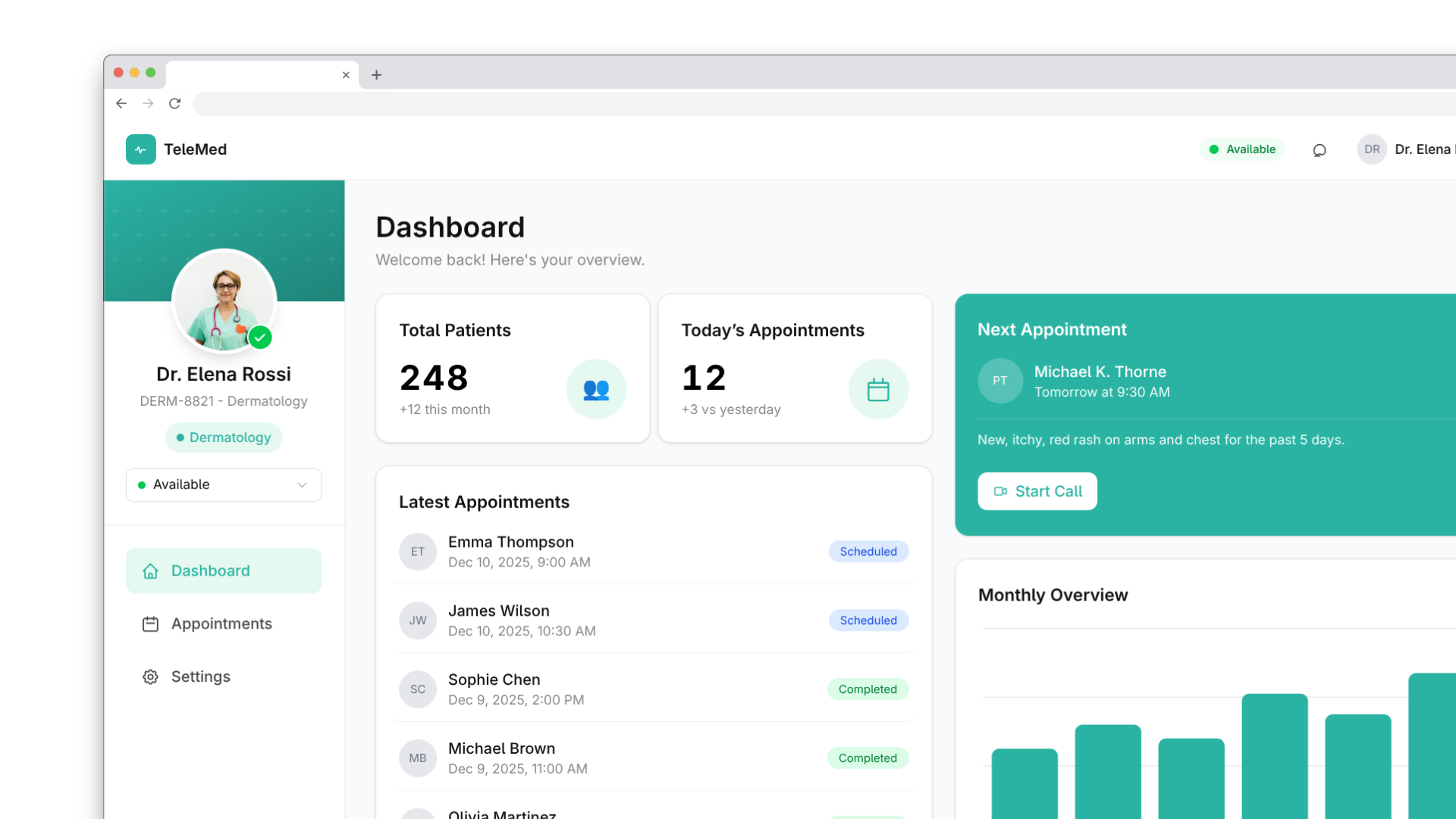
Centre de Commande Clinicien
Un tableau de bord unifié gérant les files d'attente, l'historique médical et le triage visuel en temps réel.
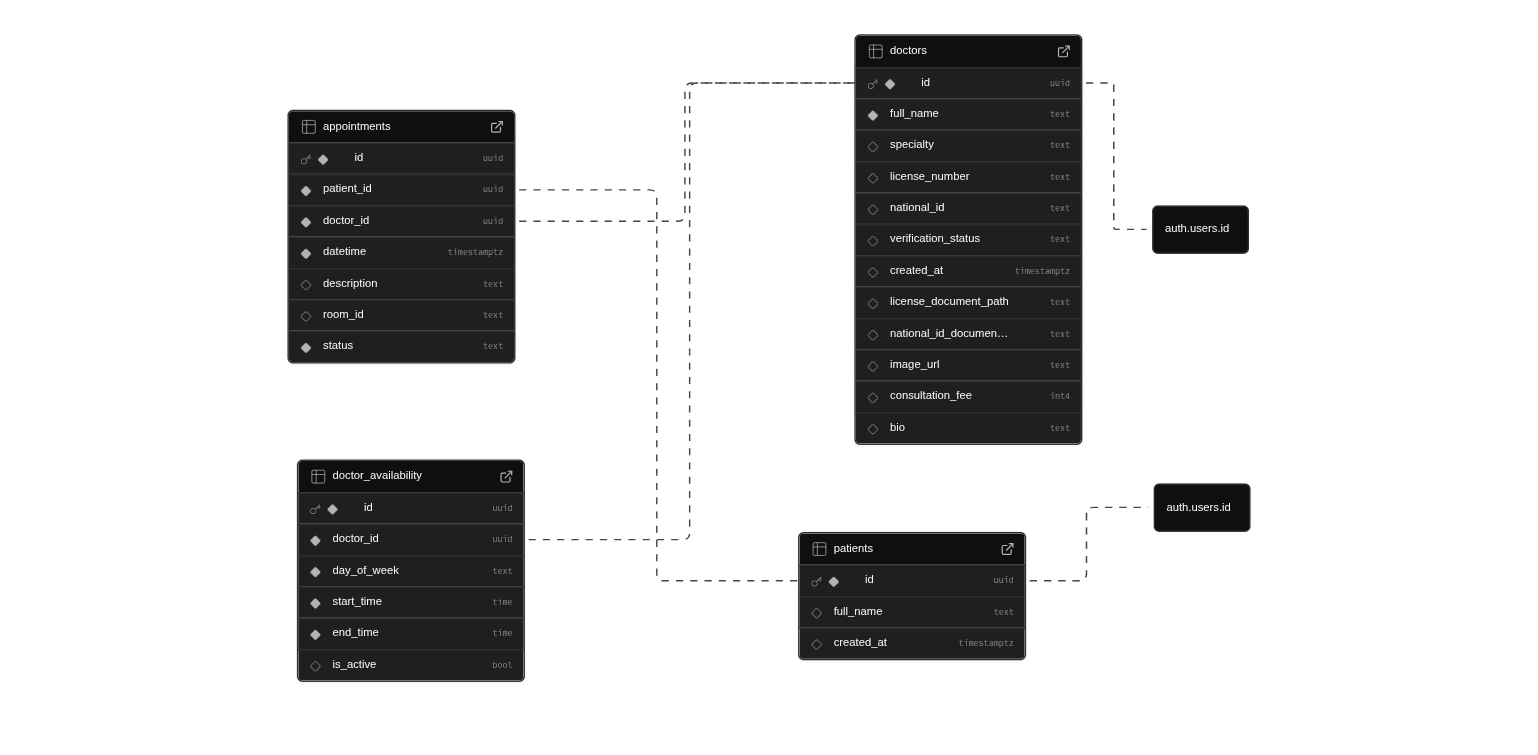
Données Zero-Trust
La sécurité au niveau des lignes (RLS) garantit une isolation totale entre les dossiers patients.
Vidéo Intégrée
Implémentation de Jitsi sur mesure, allégée pour un usage strictement professionnel.
Points Forts de l'Architecture
01.Sécurité de Typage Stricte via Supabase
Le schéma de base de données est introspecté automatiquement pour générer les définitions TypeScript, garantissant la sûreté du code de bout en bout, de PostgreSQL au client React.
interface Appointment {
id: string;
patient_id: string; // FK to auth.users
status: 'scheduled' | 'completed';
}
02.État Temps Réel Orienté Événements
Utilisation du journal de réplication de Supabase (WAL) pour envoyer instantanément les changements de BDD au client par WebSockets. La salle d'attente se met à jour en direct, sans polling.
const channel = supabase
.channel('room-updates')
.on('postgres_changes', event => {
refreshQueue(event.new);
})
.subscribe();
03.Isolation des Données Côté Serveur
Les dossiers médicaux sensibles sont appelés exclusivement via les Composants Serveurs. Ainsi, les tokens d'authentification et les données JSON brutes ne sont jamais exposés au navigateur client.